
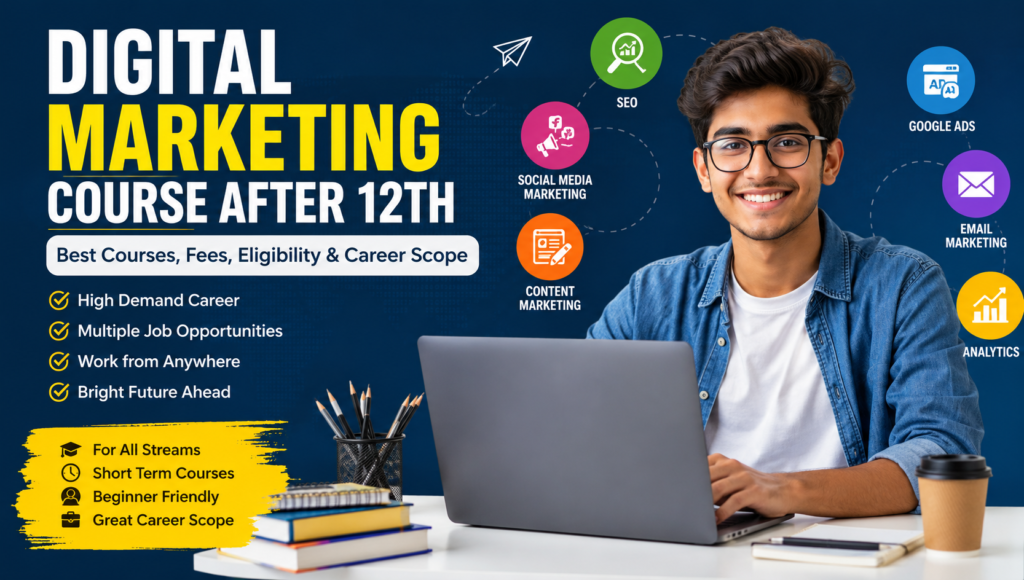
The digital world is growing faster than ever, and businesses today depend heavily on online marketing to reach customers. From Instagram ads and YouTube promotions to Google search results and email campaigns, digital marketing has become one of the most important skills in the modern business industry.
Because of this rapid growth, many students are now exploring a digital marketing course after 12th as a smart career option. Unlike traditional career paths that may require long academic programs, digital marketing offers practical skills, faster job opportunities, freelancing options, and even the chance to start earning while studying in college.
One of the biggest advantages of choosing digital marketing after 12th is flexibility. Students from any stream — Arts, Commerce, or Science — can learn digital marketing and build a successful career. You do not need advanced coding knowledge or a technical background to start.
In recent years, companies of all sizes have shifted their marketing budgets toward digital platforms. As a result, the demand for skilled digital marketers has increased significantly in India and across the world. Whether someone wants a corporate job, freelance projects, remote work opportunities, or entrepreneurship, digital marketing provides multiple career paths.
Another reason why students prefer this field is the availability of online learning. Today, there are many affordable online and offline courses that help beginners learn SEO, social media marketing, content marketing, Google Ads, and more.
In this detailed guide, you will learn everything about the digital marketing course after 12th, including eligibility, course types, fees, salary opportunities, career scope, and how to choose the right institute.
What is Digital Marketing?
Digital marketing is the process of promoting products or services using online platforms and digital channels. These channels include:
- Search engines like Google
- Social media platforms like Instagram and Facebook
- Websites and blogs
- Email marketing
- YouTube and video platforms
- Mobile applications
The main goal of digital marketing is to connect businesses with potential customers through the internet.
Traditional marketing methods such as newspaper advertisements, banners, and television commercials are still used, but digital marketing has become more effective because it allows businesses to target specific audiences and measure results in real time.
For example:
- A clothing brand can run Instagram ads targeting teenagers.
- A local business can appear on Google search results through SEO.
- An online store can send promotional emails to customers.
This is why businesses are hiring digital marketing professionals in large numbers.
Difference Between Traditional Marketing and Digital Marketing
| Traditional Marketing | Digital Marketing |
|---|---|
| Expensive advertising | Cost-effective marketing |
| Difficult to measure results | Easy performance tracking |
| Limited audience targeting | Highly targeted campaigns |
| One-way communication | Interactive communication |
| Slower marketing process | Faster and real-time marketing |
Because of these benefits, digital marketing has become an essential part of every business strategy.
Why Choose a Digital Marketing Course After 12th?
Many students feel confused after completing their 12th standard because they are unsure about which career path to choose. A digital marketing course after 12th can be an excellent option for students who want practical skills and early career opportunities.
Here are the major reasons why digital marketing is becoming popular among students:
1. High Demand Industry
Digital marketing is one of the fastest-growing industries globally. Every business today needs an online presence, which creates continuous demand for digital marketing professionals.
From startups to multinational companies, everyone requires experts who can:
- Increase website traffic
- Generate online leads
- Manage social media
- Run paid advertisements
- Improve online visibility
This demand creates stable job opportunities for students.
2. No Technical Background Required
Unlike many IT careers, digital marketing does not require advanced programming knowledge.
Students from:
- Arts
- Commerce
- Science
can easily start learning digital marketing.
Basic computer knowledge and communication skills are enough for beginners.
3. Multiple Career Opportunities
One of the biggest advantages of digital marketing is career flexibility. Students can work in different areas such as:
- SEO
- Social Media Marketing
- Content Writing
- PPC Advertising
- Email Marketing
- Affiliate Marketing
- Video Marketing
This allows students to choose a specialization based on their interests.
4. Freelancing Opportunities
Many students start freelancing while studying in college. Freelancing allows beginners to:
- Work with clients globally
- Earn side income
- Build practical experience
- Create a strong portfolio
Platforms like Upwork, Fiverr, and Freelancer provide opportunities for digital marketing freelancers.
5. Work From Home Flexibility
Digital marketing is one of the few career options that offers remote work opportunities.
Many companies hire:
- Remote SEO experts
- Social media managers
- Content writers
- Digital marketing executives
This flexibility is especially useful for students who want to work part-time.
6. Opportunity to Start Your Own Business
Digital marketing skills help students become entrepreneurs.
You can:
- Start a blog
- Launch a YouTube channel
- Build an online store
- Promote personal brands
- Start an agency
Understanding online marketing gives you the ability to grow your own business without depending entirely on paid advertising agencies.
7. Early Career Growth
Unlike traditional careers where students may need years of education before earning, digital marketing allows students to start working quickly.
Many students:
- Learn skills in 6–12 months
- Complete internships
- Get freelance projects
- Secure entry-level jobs early
This makes digital marketing a career-oriented option after 12th.
Eligibility for Digital Marketing Course After 12th
One of the best things about digital marketing courses is that eligibility requirements are simple.
Most institutes and online platforms allow students to join immediately after completing their 12th standard.
Basic Eligibility Criteria
The common eligibility requirements include:
- Completion of 12th standard from a recognized board
- Basic computer knowledge
- Interest in online marketing and social media
- Internet browsing skills
No entrance exam is required for most digital marketing courses.
Can Students From Any Stream Apply?
Yes. Students from all streams can pursue a digital marketing course after 12th.
Arts Students
Arts students often perform well in:
- Content writing
- Social media marketing
- Branding
- Communication-based roles
Commerce Students
Commerce students can excel in:
- Marketing strategy
- Paid advertising
- Business analytics
- Sales funnels
Science Students
Science students may find:
- Analytics
- Technical SEO
- Data-driven marketing
more interesting.
Digital marketing is skill-based rather than stream-based.
Is Graduation Necessary?
No, graduation is not mandatory to start learning digital marketing.
However:
- Some companies may prefer graduates for advanced roles
- Practical skills and certifications matter more in this industry
Many successful digital marketers started learning immediately after school.
Important Skills Required for Beginners
Although no advanced qualification is needed, certain skills help students succeed faster.
Communication Skills
Good communication helps in:
- Content writing
- Client handling
- Social media engagement
Creativity
Creative thinking is useful for:
- Ad campaigns
- Social media posts
- Branding ideas
Analytical Thinking
Digital marketers analyze:
- Website traffic
- User behavior
- Campaign performance
Learning Mindset
Digital marketing changes rapidly. Students must stay updated with:
- Google algorithm updates
- Social media trends
- AI tools
- Consumer behavior
Best Digital Marketing Courses After 12th
There are different types of digital marketing courses available for students depending on budget, learning goals, and career plans.
Some courses focus on basic skills, while others offer advanced training with certifications and internships.
Certificate Courses in Digital Marketing
Certificate courses are short-term programs designed for beginners.
Course Duration
- 3 to 6 months
Average Fees
- ₹10,000 to ₹50,000
Skills Covered
- SEO basics
- Social media marketing
- Google Ads
- Email marketing
- Content marketing
Suitable For
- Beginners
- Students looking for quick learning
- Freelancing starters
Certificate courses are ideal for students who want to learn practical skills quickly.
Diploma Courses in Digital Marketing
Diploma courses provide more detailed training and practical exposure.
Course Duration
- 6 months to 1 year
Average Fees
- ₹40,000 to ₹1,20,000
Skills Covered
- Advanced SEO
- PPC advertising
- Analytics
- Marketing automation
- Live projects
Suitable For
- Students seeking job-ready skills
- Individuals planning full-time careers
Many institutes also provide placement assistance with diploma programs.
Advanced Digital Marketing Programs
Advanced programs are industry-focused courses designed to make students job-ready.
Features
- Live projects
- Internship opportunities
- Industry certifications
- Practical assignments
Popular Modules
- Performance marketing
- AI marketing tools
- Conversion optimization
- E-commerce marketing
Average Fees
- ₹80,000 to ₹2,00,000
These programs are suitable for students aiming for high-paying jobs.
(Part 1 Complete — Next part will cover course fees, top skills, career scope, salary, institutes, future scope, FAQs, and conclusion.)
contiune
Online Digital Marketing Courses After 12th
Online learning has become one of the most popular ways to learn digital marketing. Many students prefer online courses because they are affordable, flexible, and accessible from anywhere.
Online digital marketing courses are suitable for:
- College students
- Freelancers
- Part-time learners
- Beginners with limited budgets
Benefits of Online Digital Marketing Courses
Flexible Learning Schedule
Students can learn:
- Anytime
- Anywhere
- At their own pace
This is especially helpful for students balancing college studies.
Affordable Fees
Online courses are generally cheaper than offline classroom programs.
Some platforms even offer:
- Free beginner courses
- EMI payment options
- Lifetime access
Access to Industry Experts
Many online platforms provide training from:
- Industry professionals
- Agency owners
- Experienced marketers
Students gain practical insights from real-world projects.
Updated Course Content
Digital marketing changes rapidly. Online platforms frequently update:
- SEO strategies
- Google Ads methods
- AI marketing tools
- Social media algorithms
This helps students stay industry-ready.
Degree Courses Related to Digital Marketing
Some universities now offer degree programs related to digital marketing and online business.
Popular options include:
- BBA in Digital Marketing
- Bachelor in Media & Marketing
- B.Com with Digital Marketing
- BA in Advertising & Digital Marketing
Duration
- 3 years
Average Fees
- ₹1 lakh to ₹5 lakh depending on the college
Advantages of Degree Courses
- Academic qualification
- Long-term career growth
- Internship opportunities
- Campus placements
These programs are ideal for students who want both a degree and digital marketing skills together.
Digital Marketing Course Fees After 12th
The fees for digital marketing courses depend on:
- Institute reputation
- Course duration
- Online or offline mode
- Certifications included
- Internship opportunities
Students should compare course features instead of choosing only based on price.
Digital Marketing Course Fees Comparison Table
| Course Type | Duration | Average Fees | Mode |
|---|---|---|---|
| Basic Certificate Course | 3–6 Months | ₹10,000 – ₹50,000 | Online/Offline |
| Diploma Course | 6–12 Months | ₹40,000 – ₹1,20,000 | Offline |
| Advanced Program | 6–15 Months | ₹80,000 – ₹2,00,000 | Online/Offline |
| Degree Program | 3 Years | ₹1 Lakh – ₹5 Lakh | Offline |
| Free Online Courses | Self-paced | Free | Online |
Affordable vs Premium Courses
Affordable Courses
Affordable courses are suitable for beginners who want:
- Basic understanding
- Freelancing skills
- Side income opportunities
These courses usually focus on fundamentals.
Premium Courses
Premium programs offer:
- Live projects
- Internship opportunities
- Placement support
- Industry certifications
- Mentorship
These are suitable for students planning serious long-term careers.
Skills You Learn in a Digital Marketing Course
A digital marketing course after 12th helps students develop multiple practical skills that are highly valuable in the online business world.
Let’s understand the major skills covered in digital marketing training.
SEO (Search Engine Optimization)
SEO is the process of improving a website’s visibility on Google search results.
Students learn:
- Keyword research
- On-page SEO
- Technical SEO
- Link building
- Website optimization
SEO professionals help businesses rank higher on search engines and generate organic traffic.
Social Media Marketing
Social media marketing focuses on promoting brands on platforms such as:
- YouTube
Students learn:
- Content creation
- Audience engagement
- Paid campaigns
- Influencer marketing
- Social media strategy
This is one of the most creative areas in digital marketing.
Google Ads (PPC Advertising)
Google Ads allows businesses to run paid advertisements online.
Students learn:
- Search ads
- Display ads
- YouTube ads
- Shopping ads
- Campaign optimization
PPC experts are in high demand because businesses spend large budgets on online advertising.
Content Marketing
Content marketing involves creating valuable content to attract customers.
This includes:
- Blog writing
- Website content
- Video scripts
- Infographics
- Social media content
Good content helps businesses build trust and increase sales.
Email Marketing
Email marketing is still one of the highest ROI marketing methods.
Students learn:
- Email automation
- Newsletter campaigns
- Lead nurturing
- Email copywriting
- Conversion strategies
Many companies use email marketing for customer retention.
Affiliate Marketing
Affiliate marketing allows individuals to earn commissions by promoting products online.
Students learn:
- Affiliate platforms
- Traffic generation
- Conversion tracking
- Niche marketing
Many freelancers and bloggers use affiliate marketing to generate passive income.
Web Analytics
Analytics helps marketers understand:
- User behavior
- Website traffic
- Campaign performance
- Conversion rates
Students often learn tools such as:
- Google Analytics
- Search Console
- Tag Manager
Data analysis helps businesses improve marketing strategies.
Copywriting
Copywriting is the skill of writing persuasive content that encourages users to take action.
Examples include:
- Ad copy
- Landing pages
- Sales pages
- Email copy
Good copywriting can significantly increase conversions.
Video Marketing
Video content is growing rapidly across digital platforms.
Students learn:
- Video promotion
- YouTube SEO
- Short-form content strategy
- Audience engagement
Video marketing is especially important for brands targeting younger audiences.
Career Scope After Completing a Digital Marketing Course
The career scope in digital marketing is enormous because every business now needs online marketing services.
After completing a digital marketing course after 12th, students can work in:
- Startups
- Agencies
- E-commerce companies
- Media companies
- Freelancing platforms
- Personal businesses
Popular Job Roles in Digital Marketing
SEO Executive
SEO executives improve website rankings on search engines.
Responsibilities:
- Keyword research
- Website optimization
- Link building
- SEO audits
Social Media Manager
Social media managers handle brand presence on platforms like Instagram and Facebook.
Responsibilities:
- Content planning
- Audience engagement
- Campaign management
- Trend analysis
PPC Expert
PPC specialists manage paid ad campaigns.
Responsibilities:
- Running Google Ads
- Optimizing ad budgets
- Tracking conversions
- Improving ROI
Content Writer
Content writers create:
- Blogs
- Website pages
- Social media captions
- Marketing content
Content writing is one of the easiest entry points for beginners.
Email Marketing Specialist
These professionals manage:
- Email campaigns
- Automation tools
- Customer retention strategies
Digital Marketing Executive
This is one of the most common beginner roles.
Executives work on:
- SEO
- Ads
- Social media
- Content marketing
This role helps students gain broad industry experience.
Freelancer
Freelancers work independently with clients worldwide.
They can offer services such as:
- SEO
- Content writing
- Social media handling
- Paid advertising
Freelancing provides flexible earning opportunities.
YouTuber or Influencer
Many students use digital marketing skills to build:
- Personal brands
- YouTube channels
- Instagram pages
- Online businesses
This can become a full-time income source over time.
Industries Hiring Digital Marketers
Digital marketers are needed in almost every industry, including:
- E-commerce
- Healthcare
- Education
- Real estate
- Finance
- Fashion
- Travel
- Technology
This wide industry demand creates strong career stability.
Future Career Growth
With experience, professionals can move into higher positions such as:
- Digital Marketing Manager
- SEO Manager
- Performance Marketing Specialist
- Brand Strategist
- Marketing Consultant
Experienced marketers can also start their own agencies.
(Part 2 Complete — Next part will cover salary, best institutes, online vs offline comparison, future scope, FAQs, conclusion, and SEO additions.)
contiune
Salary After Digital Marketing Course
One of the biggest reasons students choose a digital marketing course after 12th is the attractive salary potential and multiple earning opportunities.
Digital marketing salaries depend on:
- Skills
- Experience
- Certifications
- Specialization
- Location
- Portfolio quality
Freshers may start with moderate salaries, but growth in this industry is usually fast for skilled professionals.
Fresher Salary in Digital Marketing
Students who complete a digital marketing course and gain practical skills can apply for entry-level jobs.
Average Fresher Salary in India
| Job Role | Average Monthly Salary | Average Annual Salary |
|---|---|---|
| SEO Executive | ₹15,000 – ₹30,000 | ₹2 – ₹4 LPA |
| Social Media Executive | ₹18,000 – ₹35,000 | ₹2.5 – ₹4.5 LPA |
| Content Writer | ₹15,000 – ₹40,000 | ₹2 – ₹5 LPA |
| PPC Executive | ₹20,000 – ₹45,000 | ₹3 – ₹6 LPA |
| Digital Marketing Executive | ₹20,000 – ₹40,000 | ₹3 – ₹5 LPA |
| Email Marketing Executive | ₹20,000 – ₹35,000 | ₹2.5 – ₹4 LPA |
Salary After Experience
With 3–5 years of experience, salaries increase significantly.
Experienced Professional Salary
| Experience Level | Average Salary |
|---|---|
| 1–2 Years | ₹3 – ₹5 LPA |
| 3–5 Years | ₹6 – ₹12 LPA |
| 5+ Years | ₹12 – ₹25 LPA |
Professionals specializing in:
- Performance marketing
- AI marketing automation
- SEO strategy
- Conversion optimization
often earn even higher salaries.
Freelancing Income Potential
Freelancing is one of the most attractive parts of digital marketing.
Students can earn by:
- Managing social media pages
- Writing blogs
- Running ad campaigns
- Offering SEO services
Freelancing Income
| Skill | Beginner Earnings |
|---|---|
| Content Writing | ₹500 – ₹5,000 per article |
| SEO Services | ₹5,000 – ₹50,000 per project |
| Social Media Management | ₹10,000 – ₹1 Lakh/month |
| Google Ads | ₹15,000 – ₹1 Lakh/month |
Many freelancers eventually earn more than full-time employees.
Highest Paying Digital Marketing Skills
Some digital marketing specializations offer higher salary packages because of market demand.
These include:
- Performance Marketing
- SEO Strategy
- Conversion Rate Optimization
- Marketing Automation
- Data Analytics
- E-commerce Marketing
Students who continuously upgrade their skills usually grow faster in this industry.
Best Institutes for Digital Marketing Courses After 12th
Choosing the right institute is extremely important because practical learning matters more than theory in digital marketing.
A good institute should focus on:
- Hands-on training
- Live projects
- Certifications
- Internship opportunities
- Placement support
What to Look for in a Digital Marketing Institute
1. Updated Course Curriculum
The syllabus should include:
- SEO
- Google Ads
- Social media marketing
- Analytics
- AI tools
- Content marketing
Avoid outdated courses that teach old marketing techniques.
2. Practical Training
Students should work on:
- Real campaigns
- Website optimization
- Live ad projects
- Case studies
Practical exposure helps build confidence.
3. Certifications
Good institutes provide certifications from:
- Meta
- HubSpot
- Industry-recognized organizations
Certifications improve resume value.
4. Internship Opportunities
Internships help students:
- Gain practical experience
- Understand industry workflow
- Build portfolios
This is especially important for beginners after 12th.
5. Placement Support
Institutes with strong placement support help students get:
- Entry-level jobs
- Internship interviews
- Resume preparation guidance
Placement assistance can accelerate career growth.
Online vs Offline Digital Marketing Courses
Students often get confused between online and offline learning modes. Both options have advantages and disadvantages.
The best choice depends on:
- Budget
- Schedule
- Learning preference
- Location
Online vs Offline Comparison Table
| Feature | Online Course | Offline Course |
|---|---|---|
| Flexibility | High | Limited |
| Cost | Affordable | More expensive |
| Networking | Moderate | Better networking |
| Practical Exposure | Depends on course | Usually stronger |
| Travel Requirement | No | Yes |
| Learning Speed | Self-paced | Structured |
| Accessibility | Anywhere | Location-dependent |
Advantages of Online Courses
Online courses are ideal for:
- Students with limited budgets
- College students
- Self-paced learners
Benefits:
- Flexible timing
- Lower fees
- Learn from home
- Lifetime access in some programs
Advantages of Offline Courses
Offline classroom training offers:
- Direct mentor interaction
- Better networking
- Structured discipline
- Group learning
Students who prefer classroom environments may benefit more from offline learning.
Future Scope of Digital Marketing in India
The future of digital marketing in India looks extremely promising.
As internet users continue increasing, businesses are investing more in online marketing strategies.
According to industry trends:
- E-commerce is growing rapidly
- Online education platforms are expanding
- AI-driven marketing is increasing
- Small businesses are going digital
This creates huge demand for digital marketing professionals.
Growth of Internet Users
India has one of the largest internet user bases in the world.
Millions of people use:
- YouTube
- Online shopping platforms
Businesses must market online to reach these users.
Rise of E-Commerce
E-commerce platforms continue growing rapidly.
Companies need digital marketers for:
- Product promotions
- SEO
- Paid ads
- Influencer campaigns
- Customer retention
This creates continuous job opportunities.
AI and Automation in Marketing
Artificial Intelligence is transforming digital marketing.
Modern marketers use AI tools for:
- Content generation
- Analytics
- Customer targeting
- Ad optimization
Students who learn AI-powered marketing tools will have better future opportunities.
Startup Ecosystem in India
India’s startup ecosystem is growing rapidly.
Startups require:
- Affordable marketing
- Social media growth
- Brand awareness
- Online lead generation
Digital marketers play an important role in helping startups scale quickly.
Global Career Opportunities
Digital marketing is not limited to India.
Skilled professionals can:
- Work remotely for international clients
- Get foreign freelance projects
- Build global personal brands
This creates excellent international career opportunities.
Advantages of Starting Digital Marketing Early
Learning digital marketing after 12th gives students a strong career advantage.
Starting early allows students to:
- Build experience faster
- Earn while studying
- Explore freelancing
- Develop entrepreneurial skills
Earn While Studying
Many students start earning during college through:
- Freelancing
- Blogging
- Affiliate marketing
- Social media management
This reduces financial dependence.
Build a Strong Portfolio Early
Students who start early can create:
- Websites
- Blogs
- SEO projects
- Social media pages
A strong portfolio improves job opportunities later.
Better Career Flexibility
Digital marketing skills can be used in:
- Jobs
- Business
- Freelancing
- Content creation
This flexibility provides multiple income options.
Personal Branding Opportunities
Students can build their personal brand on:
- YouTube
Personal branding helps create long-term career growth.
How to Choose the Right Digital Marketing Course
Choosing the right course is extremely important for career success.
Students should not select courses only based on advertisements or low fees.
Important Factors to Consider
Check the Course Syllabus
A good syllabus should include:
- SEO
- Google Ads
- Social media marketing
- Analytics
- AI tools
- Practical assignments
Compare Certifications
Industry-recognized certifications increase credibility.
Look for programs offering:
- Google certifications
- Meta certifications
- HubSpot certifications
Read Student Reviews
Reviews help students understand:
- Teaching quality
- Placement support
- Practical exposure
Always research before joining any institute.
Verify Placement Records
Check:
- Hiring companies
- Internship support
- Placement success rate
Placement assistance can help beginners secure jobs faster.
Look for Practical Training
Practical learning matters more than theory.
Students should work on:
- Live websites
- Campaigns
- Case studies
- Real marketing tools
Frequently Asked Questions (FAQs)
1. Can I do a digital marketing course after 12th?
Yes, students from any stream can pursue a digital marketing course after completing 12th standard.
2. What is the eligibility for digital marketing courses?
Basic computer knowledge and completion of 12th standard are usually enough.
3. What are the fees for digital marketing courses after 12th?
Course fees can range from ₹10,000 to ₹2,00,000 depending on the course type and institute.
4. Is digital marketing a good career option after 12th?
Yes, digital marketing offers strong career growth, freelancing opportunities, and high industry demand.
5. Can Arts students learn digital marketing?
Absolutely. Students from Arts, Commerce, and Science streams can all succeed in digital marketing.
6. What is the average salary of a digital marketer?
Freshers usually earn between ₹2–5 LPA, while experienced professionals can earn significantly higher.
7. Is coding required in digital marketing?
No, coding is not mandatory for most digital marketing roles.
8. Which digital marketing skill is best for beginners?
SEO, content marketing, and social media marketing are excellent starting points for beginners.
9. Can I learn digital marketing online?
Yes, many online platforms provide affordable and flexible digital marketing courses.
10. How long does it take to learn digital marketing?
Basic digital marketing skills can be learned within 3–6 months, while advanced expertise may take longer.
Conclusion
Choosing a digital marketing course after 12th can be a smart career decision for students who want practical skills, flexible career options, and strong future opportunities.
Digital marketing is one of the fastest-growing industries in the world, and businesses are continuously searching for skilled professionals who can help them grow online. Whether you want a corporate job, freelancing career, personal brand, or business opportunity, digital marketing provides multiple paths for success.
The best part is that students from any stream can start learning digital marketing immediately after school. With the right training, practical experience, and consistent learning, students can begin earning early and build a successful long-term career.
If you are interested in creativity, technology, communication, or online business growth, this field can offer excellent opportunities in the coming years.
Start learning today, build your skills step by step, and create a future-ready career in digital marketing.
Internal Linking Suggestions
- Beginner’s Guide to SEO
- What is Social Media Marketing?
- Best Career Options After 12th
- How to Become a Freelance Digital Marketer
- Top Google Certifications for Students
- Benefits of Learning SEO in 2026
- Career Scope in Content Marketing
External Reference Suggestions
- Google Digital Garage
- HubSpot Academy
- Meta Blueprint
- Google Skillshop
- SEMrush Academy